Author: Ross Paller

  • I Wholesaled 300+ Houses. I Regret it.

    I Wholesaled 300+ Houses. I Regret it.

    I’ve wholesaled over 300 houses in my career—and I regret it.

    Not because it wasn’t profitable, but because of this feeling in my gut that I still can’t shake.

    Now, I know that’s going to ruffle some feathers.

    Because on paper, wholesaling makes sense. It’s defensible. It’s efficient. It fills a gap in the market.

    But if that’s true, then why has everyone I know who used to wholesale quit for the same exact reason?

    That’s what this is really about. I want to give you the truth, not to discourage you, but to help you decide for yourself.

    Then, I want to show you how to stay in the game without crossing the line.


    What Wholesaling Really Is

    If you already know how wholesaling works, you can skip ahead.

    But here’s the quick version.

    Let’s say you see a house listed on Zillow for $200,000.

    You call the owner or agent and say, “I’ll buy this.”

    You both sign a contract to close in 30 days.

    Before that closing date comes, you find another buyer willing to pay $220,000 for it.

    Instead of buying the house yourself, you assign your purchase contract to that buyer and keep the $20,000 difference.

    That’s wholesaling in a nutshell—no financing, no ownership, no repairs.

    Just connecting a seller who wants out with a buyer who wants in.

    It’s arbitrage.

    And the world runs on arbitrage.

    You don’t drive to a banana plantation to get bananas.

    You don’t visit an oil rig to fill up your gas tank.

    There’s always someone in the middle—someone who bridges the gap, who makes messy assets liquid.

    That’s what wholesalers do.


    Why Wholesaling Works (and Feels Wrong)

    Wholesalers serve a real purpose.

    They help sellers offload distressed properties quickly. They handle the paperwork.

    They deal with title issues nobody else wants to touch.

    They spend thousands on marketing just to find these leads.

    And yes, they deserve to get paid for that.

    But here’s where things get complicated.

    Because to make wholesaling work, you have to buy under market value.

    That’s the only way you make the spread.

    And that’s where the line starts to blur.

    You’re not buying or selling houses—you’re selling contracts.

    And you’re often negotiating with people who are vulnerable, stressed, and underinformed.

    Even when the numbers make sense, something deep inside you starts to whisper: Is this right?


    The Carpetbagger Problem

    Let’s take a quick detour into history.

    After the Civil War, the South was in ruins.

    People were desperate to sell land and rebuild their lives.

    And then came a wave of opportunists—Northern businessmen with cash—offering quick deals to buy up property cheap.

    They were called carpetbaggers because they carried their belongings in bags made of carpet.

    On paper, these guys were heroes. They brought liquidity, rebuilt towns, and reactivated local economies.

    But history didn’t remember them that way.

    History remembered them as exploiters.

    Even though their deals were “fair,” everyone knew who came out ahead—and who got left behind.

    That’s what wholesaling started to feel like for me.

    A clean deal on paper. A sour deal in the gut.


    The Truth About Exploitation

    Look, I’m no softy. I’m a capitalist, through and through.

    I’ve done deals with human waste in the living room.

    I’ve closed in seven days when a seller desperately needed cash.

    I’ve had sellers thank me afterward.

    So, yes—many of my deals felt fair and even helpful.

    But here’s what I couldn’t ignore:

    Every time there’s a $40,000 spread, there’s temptation.

    Temptation to push the limits.

    To blur the truth.

    To justify it because it’s just business.

    And that’s the slippery slope.

    Wholesaling, by definition, is “exploiting price differences.”

    That’s the literal dictionary definition.

    And if I, as a professional investor, have never felt exploited by the price I paid for a house—then who’s being exploited?

    That question kept me up at night.


    The Gut Feeling That Doesn’t Go Away

    Over time, I started to notice a pattern.

    Everyone I knew who had been successful at wholesaling eventually started to feel the same way I did.

    It’s not guilt. It’s not shame. It’s more like a quiet unease.

    A sense that even though everything’s technically above board, something about the dynamic feels off.

    That’s when I realized what I really wanted:

    To earn my money by adding value to the world, not just extracting it.

    And that’s how I ended up here—building real value through the Solo House Flipper model.

    Because financial freedom means nothing if you can’t sleep at night.


    The Three Ways to Stay on the Right Side of the Line

    Now, I’m not here to moralize. I’m here to give you tactics.

    If you still want to do deals, here are the three ways to do it right.

    1. Be Completely Honest

    Tell the seller exactly what you’re doing.

    Explain how wholesaling works and what your role is.

    Say you have a huge list of buyers who buy houses like theirs—and you’re connecting the dots.

    But don’t lie about being the buyer if you’re not.

    Just know that in many states, this crosses into “brokering,” which may require a license.

    So, talk to an attorney before you do it.

    2. Bird-Dog for Experienced Investors

    Find an investor with cash who buys houses and doesn’t have time to hunt for deals.

    Ask them what they want—price range, location, condition—and go find it.

    Before you sign any contract, confirm with that investor that they’ll buy it.

    If they say yes, you close it, collect your fee, and move on.

    Everyone wins.

    And if they ever flake, you never work with them again.

    3. Buy It Yourself

    The gold standard.

    If you’re willing to buy the property yourself, you can’t go wrong.

    Because when you’re taking the risk, you deserve the upside.

    Sometimes that upside disappears—like the time I bought a house with 400 tires in the backyard and a roach infestation that ate my profit alive.

    But that was my risk to take.

    That’s the game.

    And if you genuinely intend to buy a property but later assign it to another investor—as long as you’re fully ready and willing to close yourself—that’s fair.

    That’s honorable.


    The Real Problem

    The problem isn’t making money.

    The problem is locking up houses you can’t or won’t buy—taking advantage of people who don’t understand what’s happening.

    That’s what leaves the bad taste in your mouth.

    That’s what makes you lose sleep.

    But if you’re willing to stand behind your deals, write the checks, and deliver real value, you can still make a fortune in this business—and keep your integrity intact.


    Final Thoughts

    Most wholesalers who last long enough eventually feel that same gut pull.

    They realize there’s a right way and a wrong way to make money.

    And they start shifting toward building, not arbitraging.

    Because good sales isn’t trickery—it’s deal-making.

    And good deals come from being genuine.

    That’s why I say this:

    Skills are the real wealth in this game.

    Learn to negotiate.

    Learn to build.

    Learn to lead.

    And as you do, keep this question close:

    How would you feel if your actions made the front page of the news?

    Or simpler—how would you feel if your kids saw what you’d done?

    For me, that question changed everything.

  • Sure Way to Wealth Through Real Estate (if you’re in your 20’s or 30’s)

    Sure Way to Wealth Through Real Estate (if you’re in your 20’s or 30’s)

    TL;DR

    If you’re young, ambitious, and ready to build real wealth, real estate is your best shot. But before you even think about buying a house, there are six hard rules you need to live by. These will test your discipline, mindset, and willingness to do the work.

    Follow them, then use the step-by-step roadmap at the end to go from zero to a growing portfolio—without needing anyone on your payroll.


    You’re Reading This Because…

    You’re in your 20s or early 30s. You’re single, driven, and trying to figure out what to pour your energy into. Maybe it’s climbing the corporate ladder, starting a business, or diving into tech, AI, or crypto.

    I don’t know what your exact path is—but I do know one thing for sure:

    If you’re not fragile, real estate can make you rich.

    These are the exact steps I took. Today, I own over 150 rental units. But before we get to the roadmap, let’s start with the six hardest rules that filter out the people who won’t make it.


    Rule #1: Save Money

    Let’s start simple. If you can’t save money, you’re not ready for real estate.

    It’s not about how much you make—it’s about how much you can keep. You can’t play this game without capital and reserves. Forget the YouTube gurus promising zero-down deals. That’s fine if it’s strategic, but if you have no savings and no discipline, you’re not an investor—you’re a liability.

    You need to:

    • Set a budget and actually stick to it.
    • Track every expense monthly.
    • Build up a cash cushion—aim for at least a few months of expenses.
    • Avoid lifestyle inflation.

    Money gives you control. Without it, you’re always being controlled. This business rewards those who delay gratification and think long-term.


    Rule #2: Take Matters Into Your Own Hands

    You have to become the fisherman, not the person waiting for fish to be handed to you.

    That doesn’t mean swinging a hammer is your full-time job—but you need to learn how things work. The best investors know how to DIY just enough to manage people effectively, and they know how to MIY (Manage It Yourself) when the situation calls for it.

    This means:

    • Knowing how to talk to contractors.
    • Understanding what a job should cost.
    • Learning to set clear expectations and follow up firmly.

    The truth is, the big money in this business isn’t made behind a desk. It’s made in the trenches—on job sites, in negotiations, and during problem-solving moments that others are too soft to handle.


    Rule #3: Know That You Are Nothing (Yet)

    I don’t say that to insult you—I say it because awareness is power.

    When you’re starting out, you don’t need to raise a fund or pitch a syndication. You need skills, not flash. Get your hands dirty. Make mistakes while the stakes are low. Work with people who know what they’re doing and learn from them.

    Forget the social media highlight reels.
    Forget “10x” thinking before you’ve done 1x.

    Start with:

    • Saving real money.
    • Borrowing from banks, not your family.
    • Executing small deals well before scaling big ones.

    There’s no shortcut here. Just hard work and compounding experience. The cream always rises to the top—but only after being under pressure.


    Rule #4: If You Want Comfort, Get a Job

    Real estate is not for the comfort-seeker.

    If you need a soft bed, a guaranteed paycheck, or someone to tell you you’re doing great, this isn’t your path. You’ll have weeks where you sleep on the floor of a job site or live in a house that barely passes inspection. That’s normal. That’s the grind.

    You need to be okay with fear. You need to take risks.
    If something scares you, that’s a good sign—it means you’re growing.

    Comfort is for people who stay poor. Growth only comes through discomfort.

    This business rewards the ones who face their problems head-on and solve them fast.


    Rule #5: Get Organized

    Your brain is not meant to store information—it’s meant to process it.

    You’ll have hundreds of tasks, projects, and ideas to juggle as an investor. Don’t rely on memory. Write everything down. David Allen, author of Getting Things Done, said it perfectly:

    “Your brain is for having ideas, not holding them.”

    Here’s how to stay sharp:

    1. Keep a notebook, notes app, or project management system.
    2. Dump every idea, task, and follow-up into it.
    3. Rank them by importance.
    4. Attack the most important ones first.

    Being organized isn’t about perfection—it’s about freeing up mental space so you can make better decisions. The clearer your mind, the better your judgment, and the faster you move toward your goals.


    Rule #6: Read, Learn, Do

    Knowledge without action is useless.

    Stop wasting hours scrolling through Instagram “motivation” posts. Pick up a real book. Study people who’ve done what you want to do. Then go apply it immediately.

    The formula is simple:

    • Learn something new.
    • Do it in real life.
    • Reflect on what worked and what didn’t.
    • Repeat.

    Experience multiplied by knowledge equals skill. The more loops you complete, the faster you grow.


    Why Real Estate Is the Greatest Game on Earth

    You Never Go Back to Zero

    Think of it like Mario checkpoints.
    Every property you buy, fix, and rent becomes your next checkpoint. Once you stabilize a property and put a tenant in, you never go back to square one—unless you make a huge mistake.

    Each deal builds on the last. That’s how you climb the ladder safely and steadily.

    It Scales Exponentially

    Scaling a real estate business isn’t about hiring employees—it’s about doing bigger deals with the same effort.

    I started with single-family homes. Then I moved to small multifamily. Eventually, I bought a 45-unit complex that appraised at $5 million a month later—all from a single 30-minute phone call.

    Same time investment, 45x the result. That’s what scalability looks like.

    You Have Ultimate Control

    Once you know how to find, fix, and rent properties, nobody can take that from you.

    You can lose everything else—your job, your car, your business—but you’ll still have the skills to rebuild from the ground up. That’s power.

    You Live Life on Your Terms

    When your properties pay for your life, you control your time.
    You can wake up late, take your kids to school, or skip the office entirely. You decide how you live, not your boss or your schedule.

    That’s the real reward of this game—freedom, not just money.


    The Step-by-Step Roadmap

    Now that you understand the mindset, here’s the practical path to follow.

    Step 1: Save Money

    Stack cash. Build discipline. The first step is always financial stability.
    When I started, I had around $30–40K saved from odd jobs. You don’t need that much, but you do need something to start.

    Step 2: Buy Your First Home (FHA Loan)

    Use an FHA loan with 3.5% down to buy a house.
    Live there, fix it, and learn.

    Start with simple repairs—paint, landscaping, cleaning. Rent out rooms to friends if you can. You’re paying a mortgage instead of rent, and you’re gaining experience in the process.

    Bonus: House Hack
    Buy a duplex or triplex. Rent the good units and live in the rough one while you fix it. That’s how you build equity and skill at the same time.

    Step 3: Repeat With 20% Down

    Once that first property is rented out, buy your next one.
    You’ll need a larger down payment (around 20%), but by now you’ve built confidence.

    Repeat the same process: live cheap, fix what you can, and rent the rest. Each property becomes another checkpoint.

    Step 4: Flip With Hard Money

    Now you’re ready for a heavier lift.

    Use a hard money loan to buy a property that needs real work.
    Hire contractors. Manage them. Expect to make mistakes—they’re part of your tuition.

    Finish strong, sell it, and save every dollar you can.

    Step 5: BRRRR — Flip to Hold

    Once you’ve got experience under your belt, it’s time to scale.
    Buy with hard money, renovate, rent, refinance, and repeat.

    This is the BRRRR method—Buy, Rehab, Rent, Refinance, Repeat.
    It’s how you build long-term wealth without constantly selling your best deals.


    The Compounding Effect

    Every property you hold accelerates your progress.
    Your mortgage balance goes down, rents rise, and appreciation compounds over time.

    Historically, U.S. real estate has appreciated around 4.27% per year. That means a $300,000 house today could be worth nearly $900,000 in 30 years—all while your tenants are paying it off for you.

    That’s the magic of leverage and patience.


    Final Takeaway

    You don’t need luck, timing, or connections to win in real estate.
    You just need discipline, courage, and consistency.

    Follow the six rules.
    Stick to the plan.
    Stack checkpoints, one property at a time.

    And one day, you’ll look back and realize—you’ve built something permanent.

    Brick by brick. Deal by deal.
    You’ve become unstoppable.


  • How to Define Your Real Estate Buy Box (Like a Pro)

    How to Define Your Real Estate Buy Box (Like a Pro)

    Professional investors know exactly what type of property they buy. Amateurs don’t. Without a clear buy box, serious partners won’t take you seriously—and worse, you’ll become bait for the sharks out there.

    Your buy box defines your ideal property—where, what, and how you invest. Here are the nine factors every investor must define before they buy their next deal.


    1. Location: “IMBY – In My Backyard”

    Proximity = Control. The closer you are to your investment, the more disciplined and effective you’ll be.

    • Buy Close to Home. Managing contractors and subs remotely is a recipe for mistakes and missed opportunities.
    • No Deals in Your Area? Drive one to two hours out. Go four or five if you must—or move, like I did.
    • All You Need: Three good comparable sales (comps). That means:
      • There’s deal flow.
      • There are active buyers.
      • You have data to make decisions.

    Urban vs Rural:

    • Urban = Predictable. Like buying a 2016 Honda Accord—you know the value.
    • Rural = Guesswork. Like buying a 1932 hot rod—could be gold, could be a money pit.

    2. Property Type

    Stick to what offers the best mix of profitability and control.

    Categories:

    1. Single-family homes
    2. Small multifamily (2–4 units)
    3. Condos/Townhomes
    4. Land
    5. Small commercial
    6. Large commercial

    Best Starting Point: Single-family or small multifamily.

    “McDonald’s isn’t a burger company—it’s a real estate company.”

    Burgers pay for the land. You should think the same way. The rental income pays for your land ownership.

    • Single-family: Smaller structure, more land = more control.
    • Large multifamily: More structure, less land = less control.

    3. Property Class

    Houses fall into four general classes:

    ClassDescriptionExample
    AUpper-middle to wealthyLuxury homes
    BMiddle class“Walmart” crowd—affordable, stable
    CWorking classSection 8, rougher neighborhoods
    DRun-downOften owned by slumlords

    Strategy: Focus on B-class for stability and appreciation, with a few C-class for consistent Section 8 income.


    4. Size: Square Footage

    Every house is just a kitchen and a bathroom—that’s the core value. Everything else is bonus space.

    • Rent is based on bedrooms, not square footage.
    • Sales price is based on square footage.

    Flips: Bigger houses mean more potential profit since extra space is cheaper to renovate. Rentals: Smaller homes perform better long-term because maintenance costs are lower.

    Ideal size: 1,000–1,600 sq. ft., typically 3 beds / 1–2 baths.


    5. Age: When It Was Built

    There are three main eras of housing:

    1. Historic (pre-1950s): Built with whatever materials were around—lots of unknowns. Great character, risky repairs.
    2. Modern (1950s–2000s): Reliable construction, standard codes, fewer surprises.
    3. New Builds: Safe but rarely a deal unless there’s a distress situation.

    Rule of thumb: Only buy historic homes if you understand how to solve weird problems.


    6. Work Level: Renovation Scope

    Four levels of renovation:

    1. Wholetail: Clean and list. Minimal effort.
    2. Cosmetic: Paint, flooring, minor updates.
    3. Gut Renovation: Full systems—mechanical, electrical, plumbing.
    4. New Build/Additions: Full construction.

    When starting out: Focus on cosmetic flips. They build experience and relationships without overwhelming risk.


    7. Style: Doesn’t Matter

    Don’t overthink architecture.

    “Style is for HGTV, not for investors.”

    Ignore design trends—focus on data, comps, and profitability.


    8. Price Point

    Anchor to your city’s median home price.

    • Buy below the median. That’s where the most opportunity exists.
    • Homes slightly under the median sell faster and appeal to more buyers.
    • Avoid luxury pricing—high-end markets turn fast in downturns.

    Safety = Longevity. The longer you stay in the game, the more experience compounds.


    9. School District

    This is already priced into the comps.

    Only consider school districts when:

    • Your comps accidentally cross into a different zone.
    • You’re comparing similar houses with price differences caused by zoning.

    Otherwise, it’s already baked into the deal.


    Why Defining Your Buy Box Changes Everything

    1. Frees Up Your Bandwidth

    You stop overanalyzing every listing. You know exactly what to buy, where to buy it, and what it should cost.

    Your brain can now focus on:

    • Finding and closing deals
    • Recruiting and managing contractors
    • Protecting your health and family

    2. Builds Intuition

    You’re no longer a generalist—you’re a specialist. Like a hunting dog trained for raccoons, not squirrels.

    Specializing in one type of deal builds pattern recognition—you know a good deal the instant you see it.

    3. Supercharges Your Marketing

    When your buy box is specific, people remember you.

    Compare:

    “I’ll buy anything, anywhere.”
    vs.
    “I buy 3-bed, 2-bath homes under 1,500 sq. ft. in East Ridge that need $25K or less in work.”

    That second guy gets calls first. Every time.


    How to Build Your Buy Box

    1. Research Your Market
      • Use Zillow or MLS data to study recent sales.
      • Walk neighborhoods. Talk to agents.
    2. Pick Three Neighborhoods
      • Learn every price per square foot.
      • Know which streets sell faster and which ones struggle.
    3. Run the Math Automatically
      • Example: A 1,200 sq. ft. home in your target area sells for $200/sq. ft.
        → ARV = $240,000.
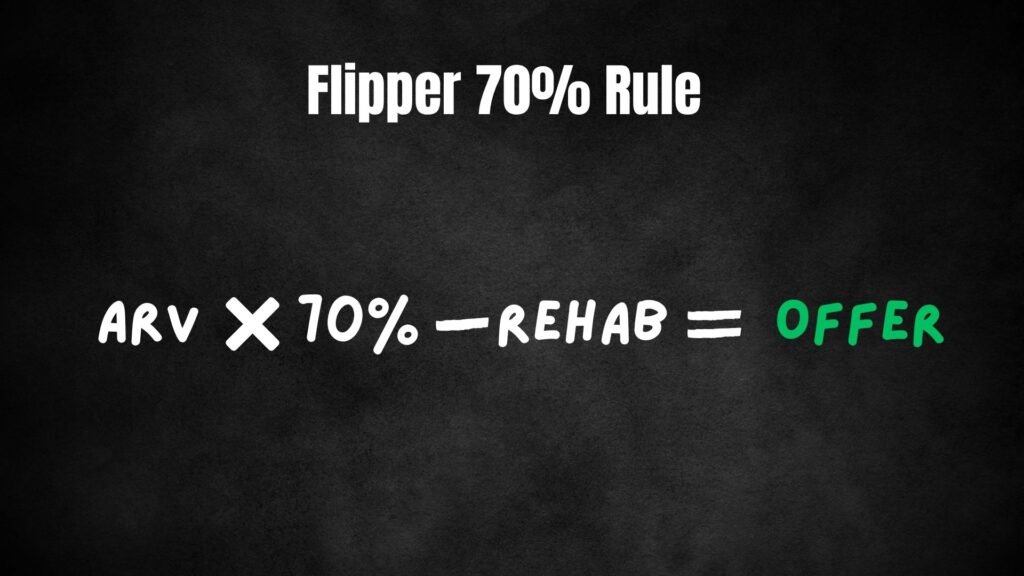
        → Using the 70% rule: $168,000.
        → Minus $20K rehab = $148,000 offer.

    That’s real intuition—your internal ARV radar.

    1. Market Like a Pro
      • Send direct mail: “I buy houses near the Hardee’s on 3rd Street.”
      • Mention other houses you’ve bought there. Build repetition.
      • Your deals compound into reputation.

    Final Thoughts

    When you define your buy box, every decision gets easier.

    You’ll know:

    • What deals to chase
    • Which ones to ignore
    • How to move fast with confidence

    It’s not guessing—it’s a system. Once you master that, every other part of real estate investing starts falling into place.

    Get the Cheat Sheet Here

  • Fastest Way to Estimate Rehab Costs (no contractors required)

    Fastest Way to Estimate Rehab Costs (no contractors required)

    There’s no time to pull in a contractor for every house you run comps for. But you need to be accurate enough to make a buying decision.

    The typical model that’s taught is a price per square foot model. Those break down quickly when you get into the details.

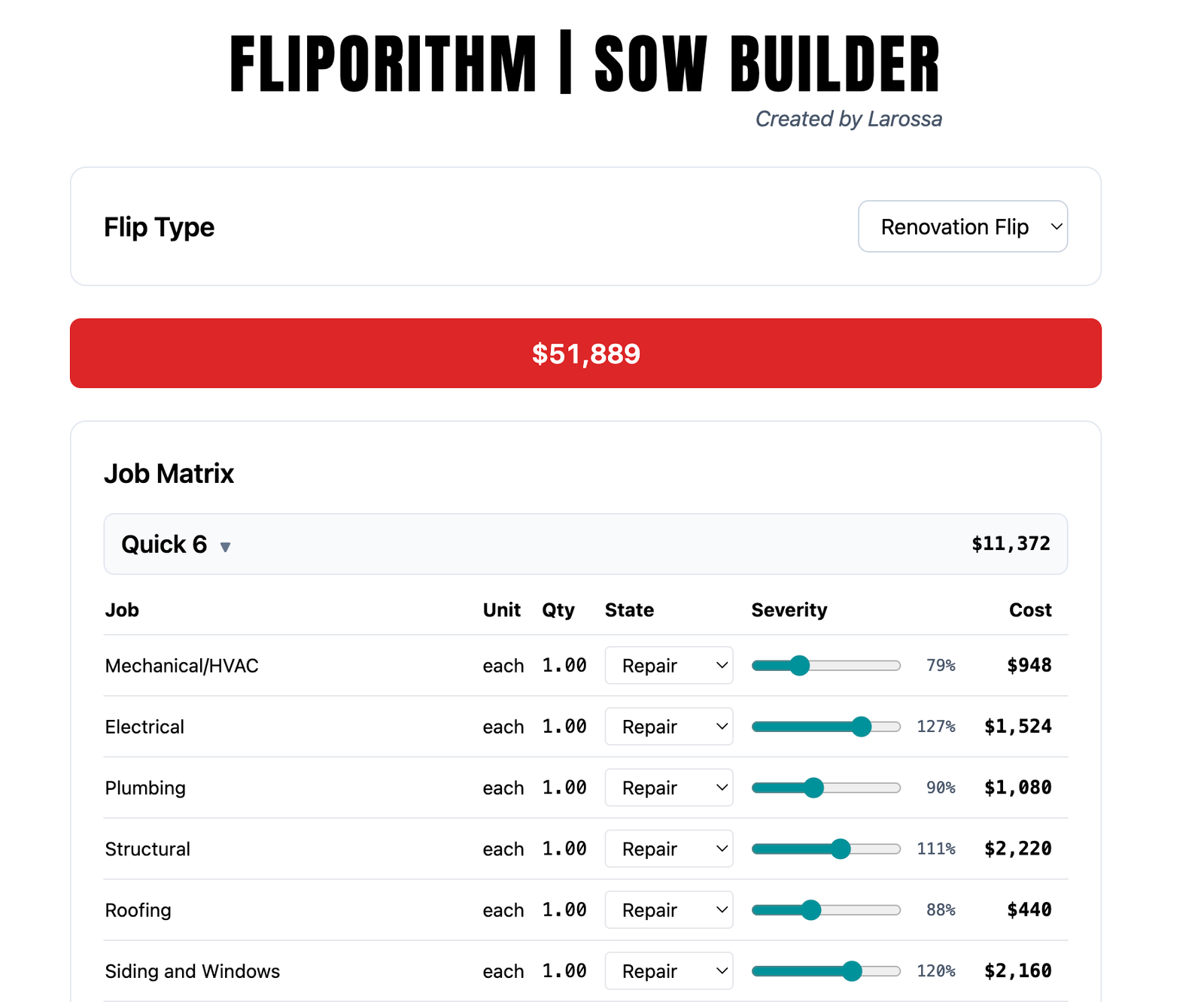
    That’s why I created this app. You can have it for free. Here’s how to use it.

    When to Use the Scope of Work App

    There are 3 different points in a project that you will need to refine your SOW/Budget:

    1. Deal Analysis
    2. Due Diligence
    3. Project Management

    With each level the scope gets refined. This calculator is about Deal Analysis. “Should I buy this house” or “Here is what I can pay for that house.”

    More of a sketch than a blueprint.

    Just think about going on a 10 day international vacation. You automatically have general idea of the rest of the costs:

    • Hotel – 200 per night
    • Food – 100 per night
    • Entertainment – 200 per day
    • Drinks – priceless

    But it’s the plane tickets you start with. That’s the deal breaker. Is it a few hundred bucks for tickets or a few thousand?

    Based on the plane ticket and my rough figuring of the rest of the vacation I know whether or not to move forward making plans. Eventually I’ll figure out exactly what hotels to stay at.

    This is exactly how to work a budget on a house.

    4 Banks of Jobs on Every Renovation Project

    There are 4 Banks of Jobs on every project:

    1. Quick 6 – Defines the flip type
    2. Auto Adds – Add to every rehab
    3. Replacements – Sets the design of every project
    4. Extras – Most common one-offs

    Every scope of work starts with a blurry vision and budget. Your goal here is to determine a purchase price quickly. Later in the process you will refine a full scope of work

    Principles and Definitions

    Job is like flooring or electrical. Jobs live inside of Projects (123 Main Street Rehab).

    Most jobs have 3 options

    • As-is. Leave it
    • Repair. Keep what’s existing but improve it
    • Replace. Demo what’s existing. Start new.

    Every job and price begins at a standard price that will work in most situations. Some are worse than others. For those you add severity.

    Severity also works in the opposite direction.

    At the bottom of the app you will find house information. Square Footage and bathrooms. That’s all you’ll need for a quick budget.

    The Quick 6

    Here’s your plane ticket.

    I know I have a cosmetic rehab on my hands if all of these are in good shape:

    • Mechanical/HVAC
    • Electrical
    • Plumbing
    • Stuctural
    • Roofing
    • Siding & Windows

    I leave a small budget in the Quick 6 even if I don’t think anything is needed. Only repairs and the severity is turned all the way down.

    On projects that require most or all of the Quick 6 you will be doing a Gut Flip.

    When you have a Gut. Drywall, Demo and Insulation will be added automatically.

    Each of these jobs can be anywhere from 8-12K plus. You see how the price per square foot model can easily erode.

    Auto Adds

    I add this list to every rehab project with the exception of a Landlord (Safety and Liability only) Flip.

    This is the icing on the cake.

    • Flooring – LVP
    • Interior Paint
    • Hardware & Fixtures
    • Landscaping Basic
    • Handyman Punchlist
    • Construction Clean

    Replacements

    Here are where you make design choices. If you follow the Solo House Flipper model, you know that this bank will get you in some big trouble.

    The goal is to look at what other houses in the neighborhood have installed in their flipped properties and do the Baseline. Pushing past that is wasted money.

    • Trim & Doors
    • Cabinets
    • Countertops
    • Backsplash
    • Shower/Tub
    • Bathroom Vanity
    • Exterior Paint
    • Gutters

    The decision between As-is, Repair, and Replace is the key here.

    Extras

    The most common “one-off” jobs for every rehab project. All flip types are pre-set to have none of these added.

    Add with care.

    • Framing Modification
    • Deck
    • Fence
    • Garage Door
    • Shower Door
    • Tree Removal
    • Clean Out
    • Drainage

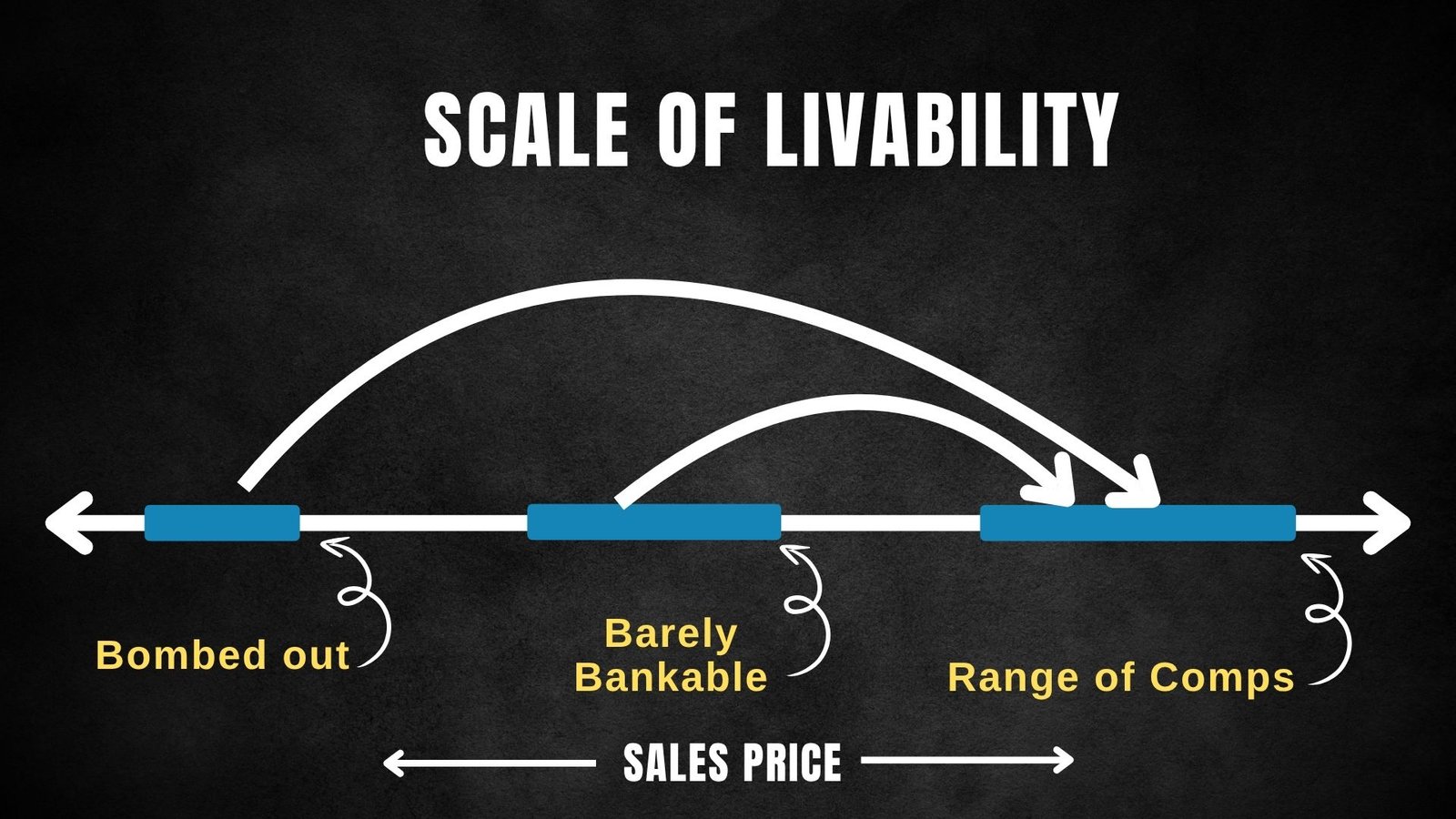
    Scale of Livability

    The Scale of Livability shows you where you’re starting and finishing based upon the flip type.

    Advanced Financials

    Always add a financial contingency. It’s preset at 10%. There will always be surprises. Be conservative.

    Sometimes you may want to add some Juice.

    I use this SOW Builder in conjunction with The Flippin’ Calc to make offer on houses.

    In some cases I’m standing in front of the seller using these calculators to make an offer. That’s where I may add The Juice to set a lower anchor price for negotiations.

    Solo House Flipper

    I hope you use these tools to go make offers on houses.

    I talk with a lot of people who are just getting into the business. Uncertainty stops a lot of them from getting started.

    These are the same tools that I use after buying 100s of houses. They work. Use them. Get started.

  • House Flipping 101: How to Flip a House from Start to Finish

    House Flipping 101: How to Flip a House from Start to Finish


    Your simple, no‑fluff starter guide to flipping houses safely and profitably.

    Goal: Help you avoid the costly mistakes I made over a decade and hundreds of flips.

    Promise: You won’t be an expert after this post, but you’ll understand the key concepts to start strong.


    TL;DR

    • Flipping has 4 steps: Deal → Strategy → Work → Market.
    • Focus on great deals, baseline renovations, reliable vendors, and tight project management.
    • Use the Scale of Livability to control risk and force value ethically.
    • Avoid odd birds, messy parcels/easements, and inconsistent flood zones.
    • Don’t over‑renovate for HGTV. Win with Baseline + Big Three.

    The 4 Steps of a Flip

    A flip is just a small business with a clear sequence. When you respect the order—deal first, then plan, then build, then sell—you reduce surprises and protect margin. Think assembly line, not art project.

    1. The Deal – Acquire the property and secure funding.
    2. The Strategy – Decide what to do and why based on comps.
    3. The Work – Execute the plan with the right contractors.
    4. The Market – Sell or rent for maximum, safe profit.

    Everything sits on two layers:

    • Foundation: Know why you’re doing this.
    • Filter (The Empire): Your long‑term mindset, systems, and relationships.

    Why Real Estate (5 Reasons)

    Real estate is forgiving when you buy right and control the work. It blends financial leverage with practical skills so your effort directly creates equity. Few assets let you improve value with a screwdriver and a checklist.

    1. History: Property trade has created wealth for thousands of years. It isn’t a fad.
    2. Leverage: Banks and investors will fund real estate more than most assets.
    3. Universal Need: Everyone lives somewhere. Demand is persistent.
    4. Control: You can directly change value with scope and execution.
    5. Two‑in‑One: Flip for income now. Hold for wealth later.

    Why Flipping Skills Compound

    Flipping builds multiple skill sets at once—valuation, renovation, and management. These skills compound because they apply to both active income (flipping) and passive income (rentals).

    When you “sell it to the bank” on a refi, your flip skills still pay. Renovations are future‑proof: every project is unique; robots can’t standardize the chaos. And once you know how to find deals and manage rehabs, you’ll never run out of ways to make money in real estate.


    The Scale of Livability (Your Safety Net)

    This lens keeps you out of trouble. Your goal isn’t perfection—it’s crossing the livable line and matching what buyers in this neighborhood expect. Move the house to the right with repairs that matter, not upgrades that don’t appraise.

    • Picture a spectrum from Bombed‑OutLivableBarely BankableComps Range.
    • Your job: move a property rightward with smart renovations.
    • This is forced appreciation. It gives you control.
    • Control lowers risk. If something goes wrong, you can still move the needle.

    Step 1 — The Deal

    Great flips are won at acquisition. A skinny buy forces risky renovations and wishful pricing. A strong buy gives room for mistakes, holds, and realistic exit strategies.

    Buy Off‑Market (When Possible)

    • MLS/Zillow often means top‑of‑market pricing.
    • Off‑market and wholesaler leads can be closer to true value.
    • Best: Generate your own deals for maximum margin and control.

    Choose Your Market

    Start local. Presence beats theory. If needed, drive 2–5 hours to an active market where you can show up. You’ll learn faster and protect yourself from surprises.

    Pick a Few Neighborhoods (Not the Whole City)

    Define by census tracts and major roads. Focus your marketing. Depth over breadth builds local brand recognition.

    Comp the Market Smartly

    Compare size, style, stories, and sale date. Keep comps inside the same neighborhood. That’s your pricing reality.

    Marketing: Outbound for Inbound

    You can’t persuade a non‑seller into selling. Spend your energy finding people who already raised their hand. Consistent, boring marketing beats heroic one‑off efforts.

    What works:

    • Direct mail (steady baseline).
    • Google PPC (intent‑driven).
    • Selective cold calling (filter hard).
    • Lead vendors (supplement only).

    Set Up Home Base

    A credible local presence matters. Have a local address, phone number, and simple website. It tells sellers you’re real.

    Use a Simple CRM

    Even a spreadsheet works. Track leads, status, and follow‑ups. Sales = Negotiation + Follow‑Up.

    DOA Filters (Deals to Skip)

    Passing on a problem is a profit decision. Odd parcels and flood quirks drain time, not just dollars. Keep your pipeline clean so you can say yes to better houses.

    • Odd birds: Outliers that don’t match the area.
    • Messy parcels: Easements or line issues that eat time.
    • Inconsistent flood zones: Avoid unless it’s standard for the area.
    • 7′ ceilings: Hard to resell. Pass.

    Closing the Deal

    Show your work like a math teacher. When sellers see the walkthrough logic and the numbers, price becomes a conclusion—not a fight. Authority is built through clarity, not pressure.

    Use the 70% Rule: 0.70 × ARV − Rehab = Max Offer.

    Get the Money (Banks Aren’t First Choice)

    Financing should match the asset’s condition. Value‑add deals need flexible lenders who fund both purchase and repairs. As your track record grows, capital options improve—and terms do too.


    Step 2 — The Strategy

    Design for the comp set, not your taste. The biggest wins come from picking the right scope and executing cleanly. Overbuilding turns equity into décor.

    Comp the Renovation (Not Just the ARV)

    Match finishes to what actually sells in the comp range:

    • Roofs, cabinets, counters, floors, baths, etc.
    • Don’t outbuild the neighborhood.

    The 4 Levels of a Scope of Work

    This ladder keeps you disciplined. Secure safety first, stop deterioration, hit the baseline that sells, then place a few strategic “wow” moments upfront. Budget flows to what buyers actually notice.

    1. Safety & Liability: Always. No slum‑lord shortcuts.
    2. Stop the Bleeding: Fix water intrusion and active decay first.
    3. Baseline: Match the middle of what sells (not the top).
    4. Big Three (Psychology): Upgrade the first three touch‑points buyers see (curb, entry, kitchen, bath).

    Chunking & Media Packets

    Organize your rehab before you swing a hammer. Chunk work by trade and timing. Then document it—photos, videos, written scope—so every contractor sees the same vision.

    Avoid the HGTV Trap

    Pretty doesn’t always pay. I once lost $200,000 chasing a dream renovation while my neighbor made six figures on a simple cosmetic job. Don’t fall for vanity flips.


    Step 3 — The Work

    Your vendor bench is your unfair advantage. One reliable all‑arounder can replace three flaky specialists. Hire slow, test small, and keep backups ready.

    Contractor Types

    • Specific‑Job Pros: Roofing, Electrical, Plumbing, Paint. Efficient but management‑heavy.
    • All‑Arounders: Do many trades. Not elite at any. Perfect for baseline work.
    • Handyman (Pro‑Level): Do everything well, fix surprises. Use as bottleneck breakers.

    Build a Recruiting Pipeline

    Treat vendors like sales leads: Source → Track → Follow‑Up → Tryout → Keepers. Great contractors make great flips.

    Expectations → Accountability

    Write it, show it, confirm it—before work starts. Clear scopes make accountability fair and fast. If it isn’t documented, it’s a wish.


    Step 4 — The Market

    Most buyers decide in seconds. Your job is to engineer those seconds: approach, entry, first sightline. Everything else should quietly confirm the decision they already made.

    FSBO vs Agent

    A strong agent can net you more and save your bandwidth. But find one who understands investors and fights for every dollar.

    Psychological Hacks

    • Filters: FSBO often signals “cheap/novice.” Avoid the wrong first impression.
    • Big Three: Place your best touches where buyers look first.
    • Finish Line: Tighten every detail—hinges, caulk, transitions. Buyers feel quality before they see it.

    Digital Introduction (Happens Before Showings)

    Online is your first showing. Nail the price bucket, lead with professional photos in a logical order, and write copy that makes people feel at home. Curiosity creates showings; showings create offers.


    The Empire (Run the Business Like a Pro)

    Systems beat moods. Protect relationships, protect cash, and protect focus. When in doubt, return to the four levers: deals, vendors, management, and smart scopes.

    Relationship Capital

    Every interaction deposits or withdraws from your emotional bank account. Be firm, fair, and clear. Accountability isn’t aggression—it’s alignment.

    Financial Contingency

    Being “zero down” isn’t being “zero dollars.” Always keep a cash cushion for surprises and opportunities. Operating from strength changes every decision.

    Manage Yourself

    It’s your organization, not theirs. Advisors, agents, and lenders work for you. Focus your bandwidth on the four levers that actually move profit.

    A mentor with 50 paid‑off rentals once told me his secret: Buy one, rent it, let the tenant pay it off, repeat. Thirty years later, he owned them all. Simple isn’t easy—but it works.


    Action Checklist

    Start small and consistent. One focused neighborhood campaign can outproduce a scattered citywide blast. Momentum compounds.

    • Pick 1–3 neighborhoods to focus on.
    • Set up a site, phone, and local address.
    • Launch direct mail + PPC with small, steady budgets.
    • Build a lead spreadsheet with weekly follow‑ups.
    • Learn your ARV and renovation comps.
    • Draft a baseline scope + identify your Big Three.
    • Recruit 5 contractors (mix of all‑arounders and pros).
    • Create media packets for your next job.
    • Partner with an investor‑friendly agent.
    • Maintain cash buffer for contingencies.

    Download Your Free Tool

    💡 Get the Flip & Calc Spreadsheet — my personal 70% rule calculator used in real deals. Input ARV, rehab, and funding to instantly see your max offer. Download Here →


    Final Word

    Stick to the four steps. Respect the baseline. Over‑index on deals, vendors, and management. Do that, and flipping becomes a repeatable, low‑drama business—not a TV show.

    Ready to start? Pick your neighborhoods and write your first mailer today.

  • The 7 Ways to Flip a House (and When to Use Each One)

    The 7 Ways to Flip a House (and When to Use Each One)

    Most people think flipping houses just means buying low and selling high—but that’s only what they’ve seen on HGTV. The truth is, there are seven distinct ways to flip a house, and once you understand all of them, every property becomes a potential deal.

    After flipping and holding over 300 properties myself, I’ve mapped out every strategy visually on what I call the Scale of Livability. It’s a framework that helps you see not just how to flip a house, but which type of investor you really are.

    Let’s break them down.


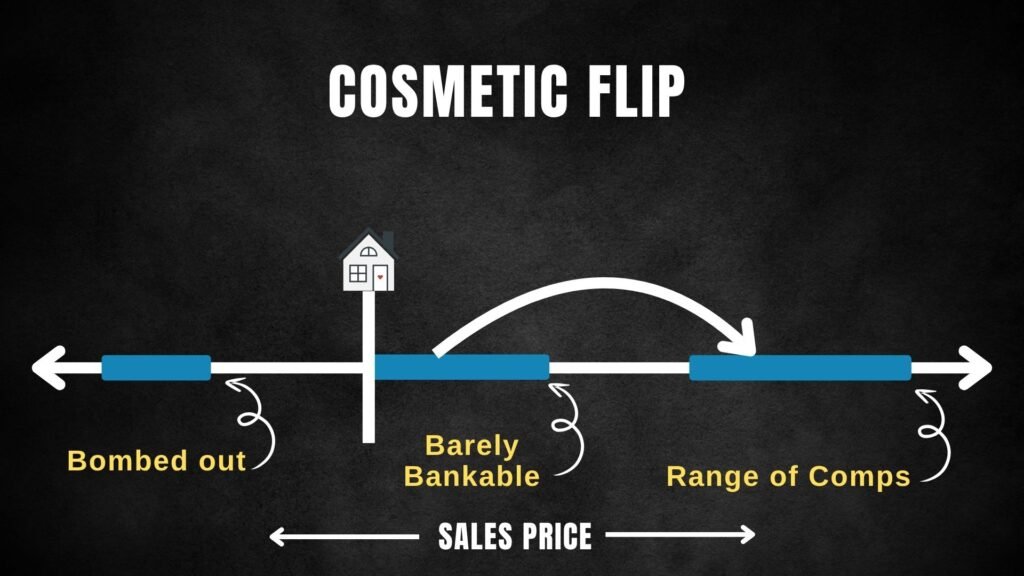
    1. The Cosmetic Flip (aka the HGTV Flip)

    This is what most people picture when they think of flipping. You buy a house that’s livable but outdated—something a bank will still lend on. I call this the Barely Bankable Range, sitting just to the right of the Livability Threshold on the Scale.

    You’re not rebuilding the house. You’re giving it a facelift. Typical renovations cost around $15 per square foot and include:

    • Floors and paint
    • Cabinet repairs or repainting
    • Trim and door touch-ups
    • Countertops, backsplash, and vanities
    • Minor landscaping

    The goal is to move a house from outdated to modern and livable without pulling drywall or touching major systems.

    Financing: Banks, private lenders, or even conventional mortgages work well here.

    Caution: Everyone wants these. Because they’re low-risk, competition is fierce, and profit margins are thinner. Serious investors eventually move into deeper territory.


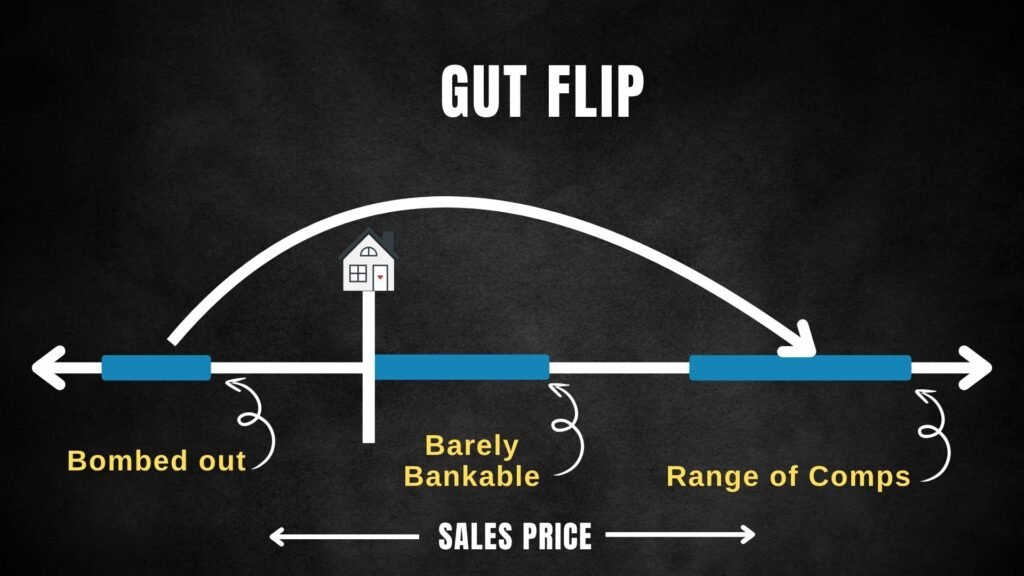
    2. The Gut Flip (aka the Zombie Flip)

    This is the other HGTV favorite—buy a bombed-out house, make it beautiful, sell for big profits.

    Guts require total renovation. You’re pulling drywall, replacing insulation, and starting from the studs. Expect around $65 per square foot and major work on what I call the Quick 6:

    • HVAC
    • Plumbing
    • Electrical
    • Structural
    • Roofing
    • Windows/Siding

    In a gut, nearly every system is replaced. These projects are riskier but more profitable, and the deals are easier to find because fewer buyers are capable of managing them.

    Financing: Hard money, private money, or cash. Traditional banks won’t lend on unlivable homes.

    Rule of Thumb: Use the 70% Rule – never pay more than 70% of the ARV (After Repair Value) minus repair costs.


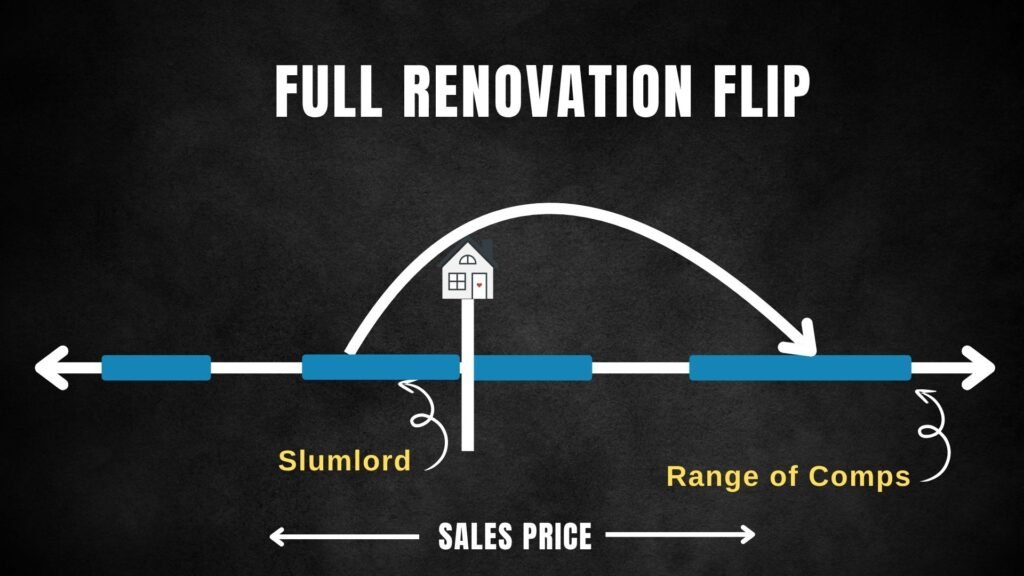
    3. The Full Renovation Flip

    This sits between the Cosmetic and the Gut. The drywall can stay, but the home isn’t livable as-is—often because of failed utilities or unsafe conditions.

    full renovation flip type. the type of flip you see on tv

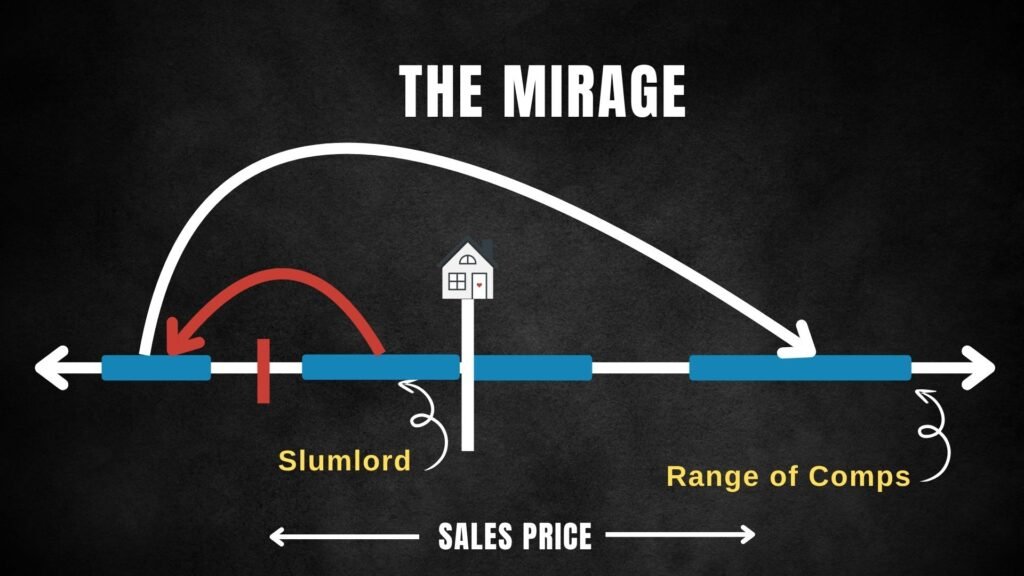
    Renovations here run around $35 per square foot. You’re repairing most of the Quick 6 but replacing only what’s necessary. Think new floors, updated kitchens, repaired roofs, and functional systems. The danger here is what I call The Mirage—thinking it’s a renovation when it’s secretly a gut. Always inspect the structure and electrical closely.

    Financing: Hard money, private money, or commercial loans. Traditional banks still won’t touch it.

    Goal: Bring the property just over the Livability Threshold so it can qualify for conventional lending.


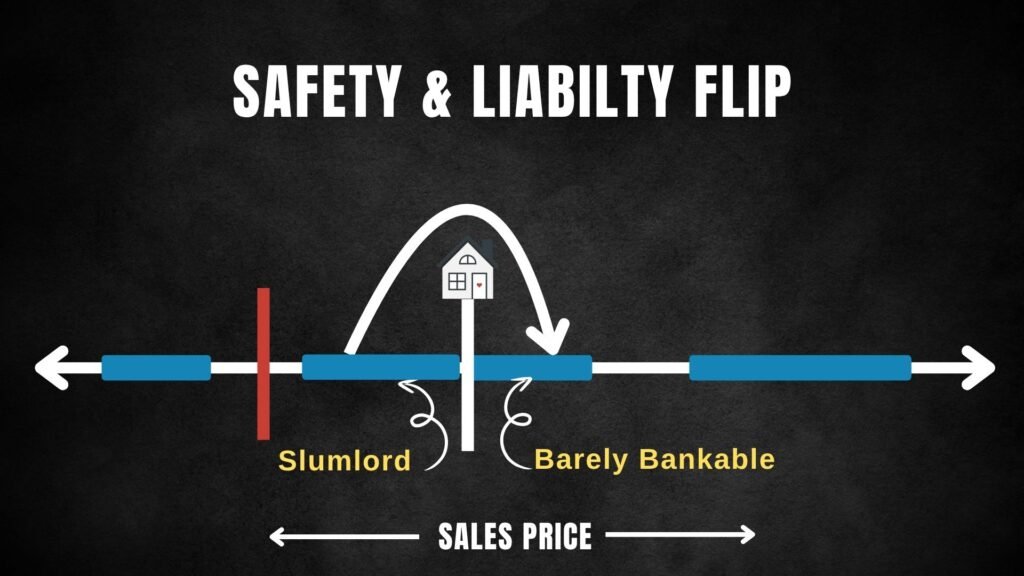
    4. The Safety & Liability Flip (aka the Landlord Flip)

    Not every flip has to be glamorous. The Landlord Flip exists for homes that have been neglected by slumlords. They may technically be livable, but not safely.

    this is the landlord flip type. also known as the safety and liability scope of work

    These flips are focused on code compliance and safety—a rehab budget under $20,000. Your goal isn’t aesthetic; it’s legal and functional. Fix anything that could cause injury, lawsuits, or code violations:

    • Fix leaks, gas lines, or broken HVAC
    • Replace shattered glass or unsafe stairs
    • Ensure fire alarms, egress, and railings meet code
    • Handle environmental hazards like mold, asbestos, or lead

    Once the property is safe, you can rent it out or sell it to another investor who wants a stabilized asset.

    Financing: Hard money, private money, or cash.

    Tip: Even if you’re doing another flip type, run this checklist. Safety repairs always come first.


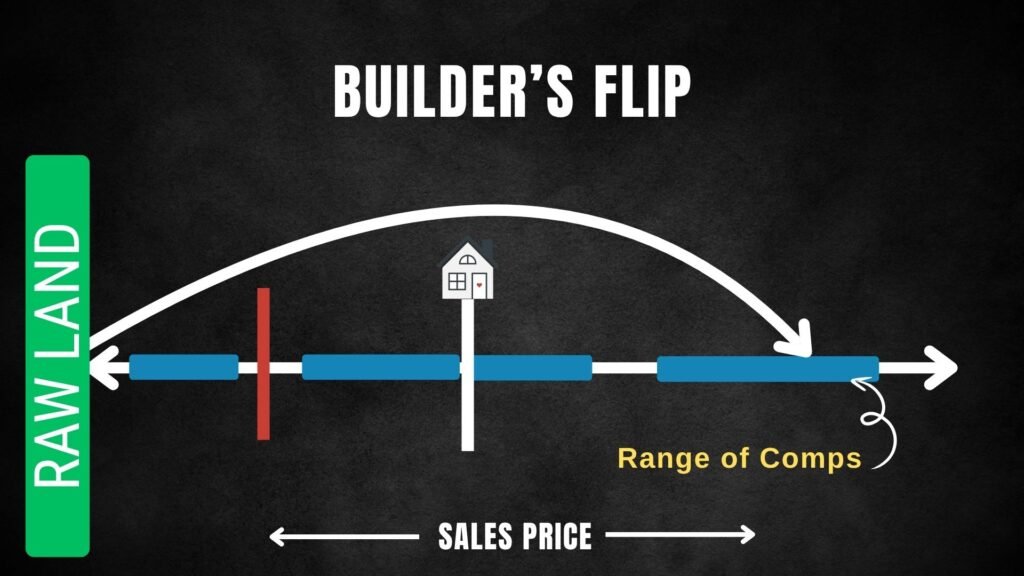
    5. The Builder’s Flip

    This is where flipping meets new construction. You’re either adding square footage (like a 500-square-foot addition) or doing a ground-up build.

    flipping a house with a new addition or a ground up build

    The math works when your after-build value justifies the construction cost:

    • Example: Houses sell for $300/sf at 1500 sf ($450K total). Adding 500 sf brings it to $600K—a $150K jump for the same location.

    Build costs range from $80–$200 per square foot, depending on land, design, and finishes. These projects require permitting, GC-level oversight, and higher risk tolerance.

    Financing: Construction loans, hard money, or private equity. These are advanced projects but can be highly profitable.


    6. The Grey Collar Flip

    You can flip houses with your mouth instead of a hammer.

    This category includes wholesaling and wholetailing.

    • Wholesaling: Get a property under contract and sell your position to another buyer. No renovation required.
    • Wholetailing: Buy a deeply discounted home, make minimal repairs ($5K or less), clean it out, and relist it.

    These strategies make money through sales and marketing skill, not construction. They’re perfect for people who are good at finding deals and negotiating but don’t want to swing a hammer.

    Financing: Depends on property condition—if livable, even conventional loans can work.


    7. The White Collar Flip

    This is the most advanced tier—flipping through paperwork and problem-solving rather than physical rehab.

    Examples include:

    • Zoning or Easement Settling
    • Lot Splitting for additional parcels
    • Property Management Turnarounds in multifamily buildings

    These projects require specialized knowledge, patience, and sometimes legal navigation—but the upside can be massive. You might turn a single-family home into two lots or convert a mismanaged building into a high-performing asset.

    Financing: Highly situational—depends on zoning, land, and use.


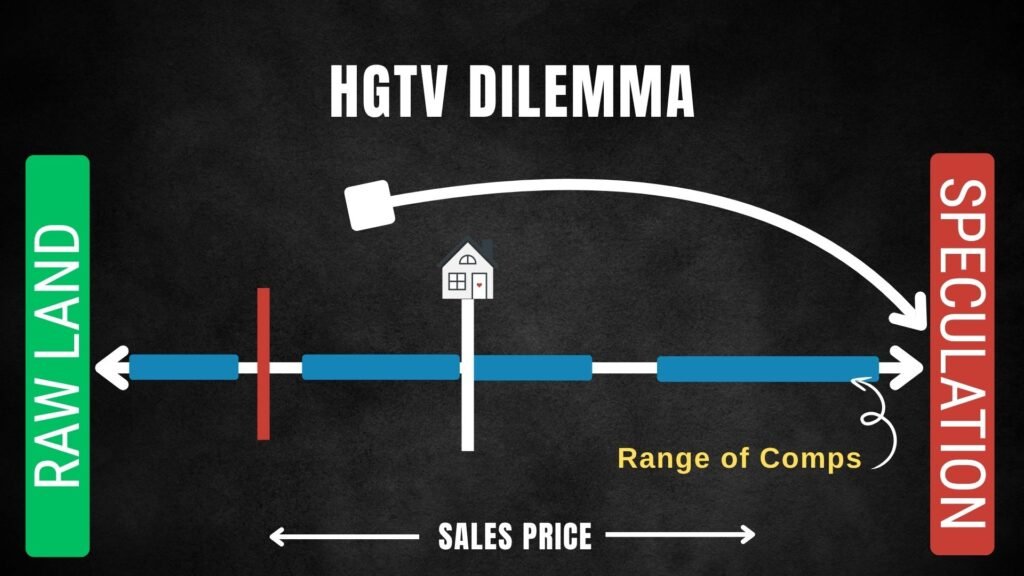
    The HGTV Dilemma (and the 4 Pitfalls to Avoid)

    Before you rush into any flip, beware of these traps:

    1. The HGTV Dilemma – Over-renovating for the neighborhood. Just because you can make it pretty doesn’t mean buyers will pay for it.
    2. The Mirage – Thinking a house only needs a renovation, then discovering it needs a gut.
    3. The Host – Designing it like you’d live there instead of for the market.
    4. Give a Mouse a Cookie – One upgrade leads to another until your budget implodes.
    one of the big house flipping scope of work mistakes
    one of the big house flipping scope of work mistakes

    Remember: Livable means monetizable. Every renovation should move the house up the livability scale just far enough to hit your exit strategy—no further.


    The Best Part: Every Flip Can Become a Rental

    Here’s the hidden truth: any house that can be flipped can also be held.

    The 70% Rule for Flippers

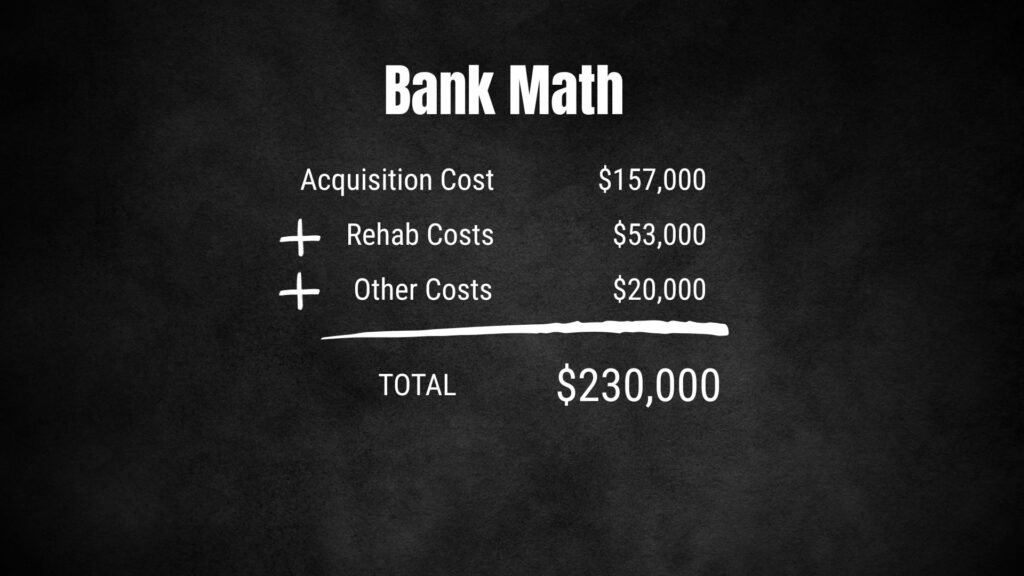
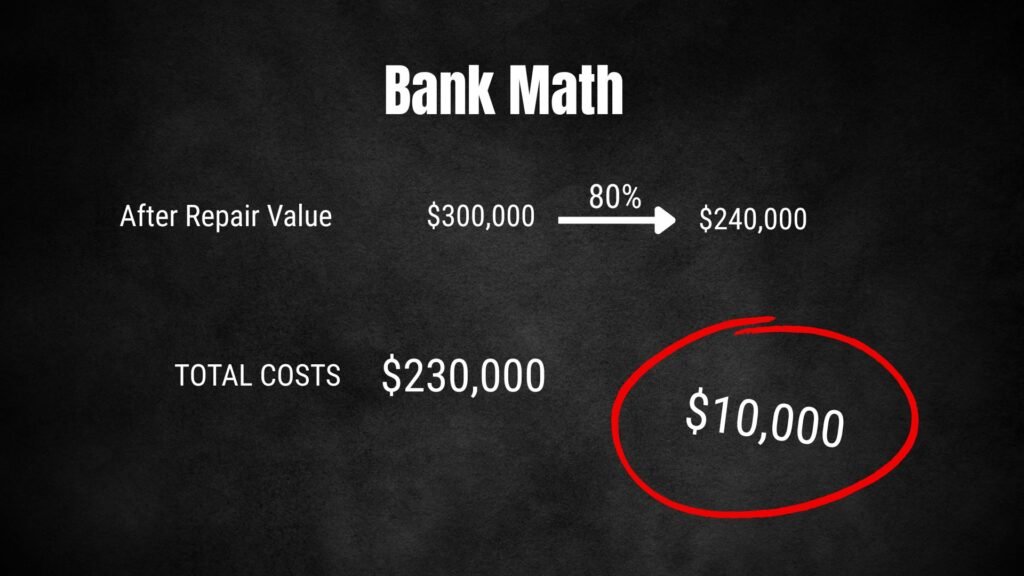
    If you use the 70% Rule, you’re usually all-in for around 80% of the ARV. Banks will refinance up to 80% of the appraised value, meaning you can pull out your initial investment and keep the asset as a rental.

    That’s the BRRRR method in disguise—and it’s how you turn short-term flips into long-term wealth.

    BRRR Math
    BRRR Math

    By the way – I’ve made an advanced, quick calculator to replace the 70% Rule.


    Final Thoughts: Choose Your Flip Type Intentionally

    Once you understand all seven strategies, you realize flipping isn’t about the house—it’s about matching the right approach to the right property.

    The cosmetic investor, the builder, the wholesaler, the problem-solver—they all operate on the same street but play entirely different games.

    So the question isn’t whether you should flip.
    It’s which type of flipper you want to be.

    One more thing…..

    To quickly assess the price of a rehab I’ve built Fliporithm.